
Brewery Sanitation with Temperature-Sensitive Labels: Verifying CIP and Hot Water Cleaning
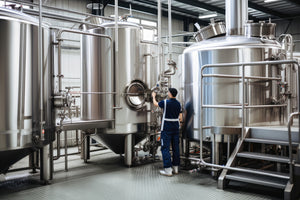

Brewery hygiene is the foundation of consistent beer quality. Unlike most food products, beer is produced through a living biological process in which the desired yeast culture competes for resources with a wide range of potential spoilage organisms — and in which off-flavours produced by even low-level contamination can render an entire batch unsaleable. The cleaning and sanitising regimes that protect fermentation vessels, conditioning tanks, bright beer tanks, pipework, and filling lines from microbial contamination are therefore not simply hygiene best practice — they are a core production control measure, and their effectiveness must be documented and verifiable.
Hot water and caustic cleaning, often combined with acid rinses and chemical sanitisers, are the standard sanitation methods in commercial brewing. Their effectiveness depends critically on achieving the correct water temperature in contact with the surfaces being cleaned. Temperature-sensitive labels provide a simple, reliable, and cost-effective method of verifying that hot water and caustic cleaning cycles are reaching the temperatures required for effective sanitation — providing the evidence that quality management systems, SALSA certification, and major retail customer audits demand.
Microbial Challenges in Brewery Environments
The primary microbial spoilage challenges in brewing include lactic acid bacteria — particularly Lactobacillus and Pediococcus species — which produce lactic and acetic acids that sour the beer and generate "ropy" textures from exopolysaccharide production. Acetic acid bacteria produce vinegary notes that are a defect in all beer styles except spontaneously fermented sours. Wild yeasts — particularly Brettanomyces bruxellensis in craft brewery environments — produce barnyard and phenolic off-flavours that are desirable in certain Belgian and sour beer styles but devastating in standard lager, ale, and stout production.
These organisms colonise equipment surfaces, pipeline dead legs, valve seats, gaskets, and fittings. They form biofilms — complex communities of cells embedded in a polysaccharide matrix — that are significantly more resistant to cleaning and sanitising chemicals than planktonic (free-floating) cells. Effective hot water cleaning disrupts and removes biofilms physically before chemical sanitisers complete the inactivation of surviving cells. The temperature of the hot water determines how effectively this physical disruption occurs: water at 60°C or above has significantly greater cleaning efficacy than water at 40–50°C.
Caustic and Hot Water Cleaning in Breweries
The standard CIP (clean-in-place) cycle for brewing vessels and pipework typically involves a cold water rinse to flush gross soil, a hot caustic (sodium hydroxide) solution wash at 70–80°C to remove organic deposits and kill most vegetative microorganisms, a cold water rinse to remove caustic, an acid rinse to remove mineral deposits and neutralise caustic residues, a final cold water rinse, and a chemical sanitiser treatment before the vessel is returned to use.
The critical thermal step in this sequence is the hot caustic wash. If the caustic solution temperature falls below the target range — typically 70–80°C — because of heat losses in long pipe runs, insufficient hot water supply, or equipment performance issues, the cleaning efficacy of the caustic wash is reduced and biofilm removal may be incomplete. Temperature-sensitive labels placed in the vessel or on a carrier element circulated through the CIP system confirm that the caustic solution reached the target temperature at the monitored point.
Hot water sanitation without caustic — using hot water alone at temperatures above 80°C for vessel and pipeline sanitation — is used in some brewery operations, particularly for vessels that have already been caustic-washed and are being sanitised between uses. For hot water-only sanitation, achieving at least 80°C at the surface being sanitised for a minimum contact time of 15–20 minutes is the standard target. Temperature-sensitive labels placed inside the vessel during the hot water sanitation cycle confirm achievement of this temperature.
Applying Temperature-Sensitive Labels in Brewery CIP Operations
Temperature-sensitive labels for brewery CIP monitoring can be applied in several ways depending on the vessel or circuit being monitored. For fermentation and conditioning vessels, the label can be applied to the inside of the vessel at a representative low point — typically near the bottom cone, which is the last area to receive hot cleaning solution and the first to cool. A carrier label attached to a small stainless steel disc that is placed inside the vessel before the CIP cycle is an alternative approach that allows easy recovery after the cycle without access to the vessel interior.
For pipework and transfer lines, the label is attached to a carrier disc and circulated through the pipeline with the CIP solution, recovered at the end of the cycle, and read to confirm that the circulating solution maintained the target temperature throughout the line. For complex systems with multiple branches, a label in each branch confirms that flow distribution is adequate to maintain temperature in all parts of the circuit.
After the CIP cycle, the label is read and the result recorded. A label that has achieved the target window confirms that the CIP cycle was thermally effective at the monitored point; a label that has not reached the target window identifies a CIP performance issue that requires investigation before the vessel or line is returned to service.
Documentation for Quality Management Systems and Certification
For breweries operating under SALSA (Safe and Local Supplier Approval) certification — the most widely used food safety certification for smaller UK food and drink producers — CIP temperature monitoring records provide evidence that cleaning and sanitising procedures are working as specified. SALSA auditors will ask to see evidence that critical cleaning parameters, including temperature, are monitored at appropriate frequency and that out-of-specification results are investigated and corrected.
Breweries supplying major retailers under BRC Food Safety or SQF certification face more detailed requirements for CIP documentation, including validation that the CIP programme achieves the required microbial reduction on all equipment in the cleaning circuit. Temperature-sensitive label records contribute to this validation evidence alongside microbiological swab results and chemical titration data for cleaning solution concentration.
Records should include the vessel or circuit cleaned, the label position, the CIP cycle date and time, the label reading (which windows activated), the acceptance criteria, the pass/fail determination, and the name of the person who performed the check. These records should be retained for the period required by the quality management system, typically a minimum of two years for SALSA and BRC purposes.
Frequently Asked Questions
What temperature is required for hot water sanitation in a brewery?
For hot water sanitation without caustic, the target is typically 80°C at the vessel surface for a contact time of at least 15–20 minutes. This achieves reliable inactivation of Lactobacillus, Pediococcus, Acetobacter, and most wild yeast strains under normal brewery contamination scenarios. For vessels with established Brettanomyces contamination, higher temperatures of 85–90°C for extended contact times may be more appropriate. Always consult a brewing microbiologist or SALSA/BRC technical advisor to confirm the temperature requirements for your specific cleaning challenge.
Can temperature-sensitive labels be used in caustic cleaning solutions?
Temperature-sensitive labels used in caustic CIP solutions must be selected in formulations that are resistant to the chemical conditions of the cleaning solution (typically 1–3% NaOH at pH 12–14). Not all standard temperature indicator labels are caustic-resistant. Contact Temperature Indicators Ltd to confirm the appropriate label formulation for use in caustic brewery CIP conditions.
How do I know where to place the temperature-sensitive label in a fermentation vessel CIP?
The critical position for temperature monitoring in a fermentation vessel CIP is the location that receives the lowest temperature during the cycle — typically the lowest point of the cone, in a conical fermenter, or the return leg of the CIP circuit in a more complex system. Heat mapping the vessel using data loggers during a validation exercise identifies the lowest-temperature point and confirms the appropriate label placement position for routine monitoring. Temperature Indicators Ltd can advise on label placement strategy for your specific vessel type and CIP system design.
Do temperature-sensitive labels need to be food-contact grade for use in brewing vessels?
Labels used inside vessels that will subsequently contain beer or brewing liquor should be food-contact-compliant grade. Food-contact-compliant temperature indicator labels are available from Temperature Indicators Ltd. Labels must be fully recovered from the vessel before the CIP cycle is considered complete and before the vessel is returned to use. Establish a documented label accountability procedure — counting labels in and counting them out — to ensure no label is left inside the vessel.
How often should CIP temperature monitoring be performed in a brewery?
Monitoring frequency should be defined in the brewery's CIP validation and monitoring programme. As a minimum, monitoring of every cleaning cycle for high-risk vessels — fermenters, bright beer tanks, and filling equipment — is standard practice in SALSA and BRC-certified breweries. For lower-risk auxiliary vessels and pipework, periodic monitoring may be sufficient. Your SALSA or BRC consultant can advise on the appropriate monitoring frequency for your specific operations.
About Temperature Indicators Ltd
Temperature Indicators Ltd is a specialist global distributor solely focused on temperature-sensitive labels, tags, and indicators for cold chain monitoring, process validation, and regulatory compliance. With 35 years of experience and operations shipping to over 50 countries worldwide, we supply food manufacturers, pharmaceutical distributors, sterile services departments, and logistics providers with the temperature monitoring solutions they need to maintain compliance. Contact us for expert guidance on temperature monitoring for your application.
Legal Disclaimer
The information provided in this article is for general guidance only. Temperature Indicators Ltd makes no warranties, express or implied, regarding the accuracy or completeness of this content. Product specifications, regulatory requirements, and industry standards may change over time. Always verify current requirements with the relevant regulatory authority and consult a qualified professional before making decisions based on information contained in this article. Temperature Indicators Ltd accepts no liability for actions taken in reliance on information provided here.
- Temperature Indicators Staff


