
Proactive Maintenance in Food and Beverage Production: Temperature Monitoring Guide
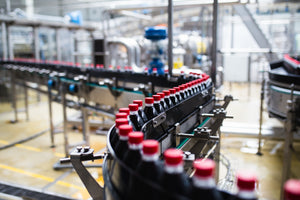

Unplanned downtime in food and beverage production is not just a maintenance problem — it is a food safety problem, a cost problem, and increasingly a regulatory and contractual compliance problem. A production line that stops unexpectedly due to equipment failure may leave temperature-sensitive products in an uncontrolled state, disrupt HACCP critical control point monitoring, and create conditions where cross-contamination risks increase. The pressure to restart production quickly can lead to shortcuts in cleaning, sanitation, and pre-start hygiene checks that compound the initial problem. The most effective response to unplanned downtime is to prevent it from happening in the first place — and temperature monitoring is one of the most valuable tools in a proactive maintenance programme for food and beverage production equipment.
This article explains how temperature-sensitive labels are used in predictive and preventive maintenance programmes in food and beverage production, the key equipment categories where temperature monitoring adds most value, and how the data from temperature labels integrates with broader maintenance management and HACCP documentation.
The Cost of Unplanned Downtime in Food and Beverage Production
The direct costs of unplanned downtime include production labour cost while the line is stopped, the maintenance intervention itself (parts, labour, and specialist support), product that is lost or must be reworked, and any cleaning and recommissioning required before production restarts. For high-volume production lines — bottling, filling, wrapping, and continuous heat treatment — these costs accumulate rapidly.
The indirect costs are often greater than the direct costs. A production stoppage that causes a missed delivery to a major retail customer may trigger penalty clauses in supply contracts. Repeated stoppages damage the facility's reliability reputation with customers and may affect listing decisions at annual supply review. For facilities working to BRC Food Safety, FSSC 22000, or SQF accreditation, documented patterns of equipment failure that affect food safety parameters can create compliance findings during audits.
Against these costs, the investment in a proactive maintenance programme that prevents failures before they occur — including the low-cost element of temperature indicator label monitoring — delivers a return that is straightforward to quantify and usually compelling.
Key Equipment Categories for Temperature Monitoring in Food and Beverage Production
Pumps and Pump Bearings
Product transfer pumps, CIP pumps, and cooling water pumps are among the highest-cycle-rate components in food and beverage production facilities. Pump bearings subject to high loads, inadequate lubrication, or misalignment will generate excess heat long before the bearing reaches the point of catastrophic failure. Temperature indicator labels applied to pump bearing housings at maintenance intervals provide a record of the maximum bearing temperature since the label was applied. A progressive increase in bearing temperature readings across successive maintenance intervals identifies a bearing in deteriorating condition, allowing planned replacement before the pump fails in service.
Electric Motors
Electric motors driving conveyors, mixers, filling equipment, and processing machinery generate heat in normal operation, but the temperature rise above ambient should be within predictable limits for a given motor size, load, and ambient temperature. A motor that consistently runs at higher temperatures than its peers in the same application may have winding insulation degradation, inadequate ventilation (blocked cooling fins, restricted air flow), or may be being operated above its rated load. Temperature indicator labels on motor end shields and body surfaces at inspection intervals provide the data needed to identify motors running outside their normal thermal range.
Heat Exchangers and Cooling Systems
Plate heat exchangers, tubular heat exchangers, and refrigeration evaporators used in food and beverage production are subject to fouling — the accumulation of deposits on heat transfer surfaces that progressively reduce thermal efficiency. As fouling increases, the heat exchanger must work harder to achieve the same temperature change, and the surface temperatures of the heat exchanger components diverge from their design values. Temperature indicator labels applied to heat exchanger body surfaces at maintenance intervals can detect developing fouling by identifying changes in surface temperature profile compared to previous readings. A heat exchanger that was running at normal temperatures a year ago but shows elevated temperatures on the hot side today may be due for a chemical cleaning cycle or inspection.
Compressed Air and Pneumatic Systems
Compressed air systems are essential utilities in most food and beverage production facilities, powering pneumatic actuators, blow-off systems, air-operated valves, and packaging equipment. Air compressors generate significant heat during compression, and overheating of compressor components — inter-coolers, after-coolers, oil separators, and compressor heads — is one of the most common causes of compressor downtime in production facilities. Temperature indicator labels on compressor housings and inter-cooler/after-cooler bodies provide monitoring data that can identify developing cooling system issues before they lead to shutdown.
Integrating Temperature Label Data with Maintenance Management Systems
Temperature indicator label data has the greatest value when recorded systematically and used for trend analysis across multiple maintenance intervals. Recording label readings in a CMMS or equipment history file, linked to the specific asset and maintenance event, allows maintenance engineers to plot the trend in maximum temperature for each monitored component over time. This trend data reveals equipment behaviour patterns that single-point readings do not: the bearing gradually running 5°C hotter with each successive service interval, even though none of the individual readings has yet exceeded the alert threshold, is the bearing that will fail before the next scheduled service if not replaced.
Temperature Monitoring and Food Safety Documentation
In food and beverage production, some equipment failures have food safety implications that go beyond the direct production cost. A heat exchanger that has developed a leak between the product circuit and the service water circuit may contaminate product. A pump seal failure may allow lubricant ingress to product. An overheating motor may ignite nearby packaging materials. Proactive temperature monitoring that identifies developing thermal anomalies before they result in equipment failure reduces the likelihood of these food safety-relevant failure modes occurring.
For BRC and FSSC 22000 certification purposes, documented evidence of a proactive maintenance programme — including temperature monitoring records that show thermal anomalies are identified and acted upon — contributes to the preventive maintenance evidence required by these standards. An equipment maintenance programme that can demonstrate it proactively identifies and addresses developing faults is more likely to satisfy auditor scrutiny than one where maintenance is purely reactive.
Frequently Asked Questions
How should temperature indicator label monitoring be integrated into a planned maintenance schedule?
Label monitoring should be built into the planned maintenance procedure for each monitored asset as a defined step: apply the label at the start of the monitoring interval, read and record the label at the next scheduled maintenance visit, replace with a fresh label, and document the result in the maintenance record. This makes temperature monitoring a standard part of each maintenance visit rather than an ad-hoc addition, ensuring consistent data collection across all monitoring points.
What temperature rise should trigger maintenance investigation for pump and motor bearings?
As a general guide, a bearing or motor surface temperature more than 40°C above ambient at the point of measurement may indicate a developing thermal issue. More specifically, any asset where the label reading at a scheduled maintenance visit is more than 10–15°C higher than the previous reading at the same visit, without an obvious explanation such as a change in load or ambient temperature, should be scheduled for early inspection. Establish a baseline temperature profile for each monitored asset during its first few monitoring intervals when equipment is known to be in good condition.
Are temperature indicator labels suitable for use in food contact zones?
Labels applied to the exterior surfaces of equipment in food contact zones should not come into direct contact with food products. However, food-contact-compliant labels are available for applications where the label may be in indirect contact with food or food contact surfaces — for example, inside vessel interiors during CIP cycles. Specify food contact compliance requirements when ordering labels for food production environments.
Can temperature indicator labels be used on high-speed conveyor bearings?
For bearings on moving conveyor components, standard self-adhesive labels are applied to the bearing housing or pillow block — the static outer component — not to the rotating shaft or belt. This provides a representative indication of bearing temperature without requiring special application techniques. For bearing monitoring on high-speed or precision conveyors, ensure the label is applied flat and flush to avoid any risk of detachment at operating speed.
What is the difference between predictive maintenance and preventive maintenance in the context of temperature monitoring?
Preventive maintenance involves performing maintenance activities at fixed intervals based on time or usage, regardless of the current condition of the equipment. Temperature indicator label monitoring at regular service intervals is a form of condition-based preventive maintenance. Predictive maintenance uses condition monitoring data — including temperature trends — to predict when a specific item of equipment will require maintenance or replacement, and to schedule that maintenance proactively based on the actual condition rather than a fixed interval. Temperature indicator labels can support a move toward predictive maintenance by providing the per-asset temperature trend data needed to predict remaining bearing and motor life.
About Temperature Indicators Ltd
Temperature Indicators Ltd is a specialist global distributor solely focused on temperature-sensitive labels, tags, and indicators for cold chain monitoring, process validation, and regulatory compliance. With 35 years of experience and operations shipping to over 50 countries worldwide, we supply food manufacturers, pharmaceutical distributors, sterile services departments, and logistics providers with the temperature monitoring solutions they need to maintain compliance. Contact us for expert guidance on temperature monitoring for your application.
Legal Disclaimer
The information provided in this article is for general guidance only. Temperature Indicators Ltd makes no warranties, express or implied, regarding the accuracy or completeness of this content. Product specifications, regulatory requirements, and industry standards may change over time. Always verify current requirements with the relevant regulatory authority and consult a qualified professional before making decisions based on information contained in this article. Temperature Indicators Ltd accepts no liability for actions taken in reliance on information provided here.
- Temperature Indicators Staff


